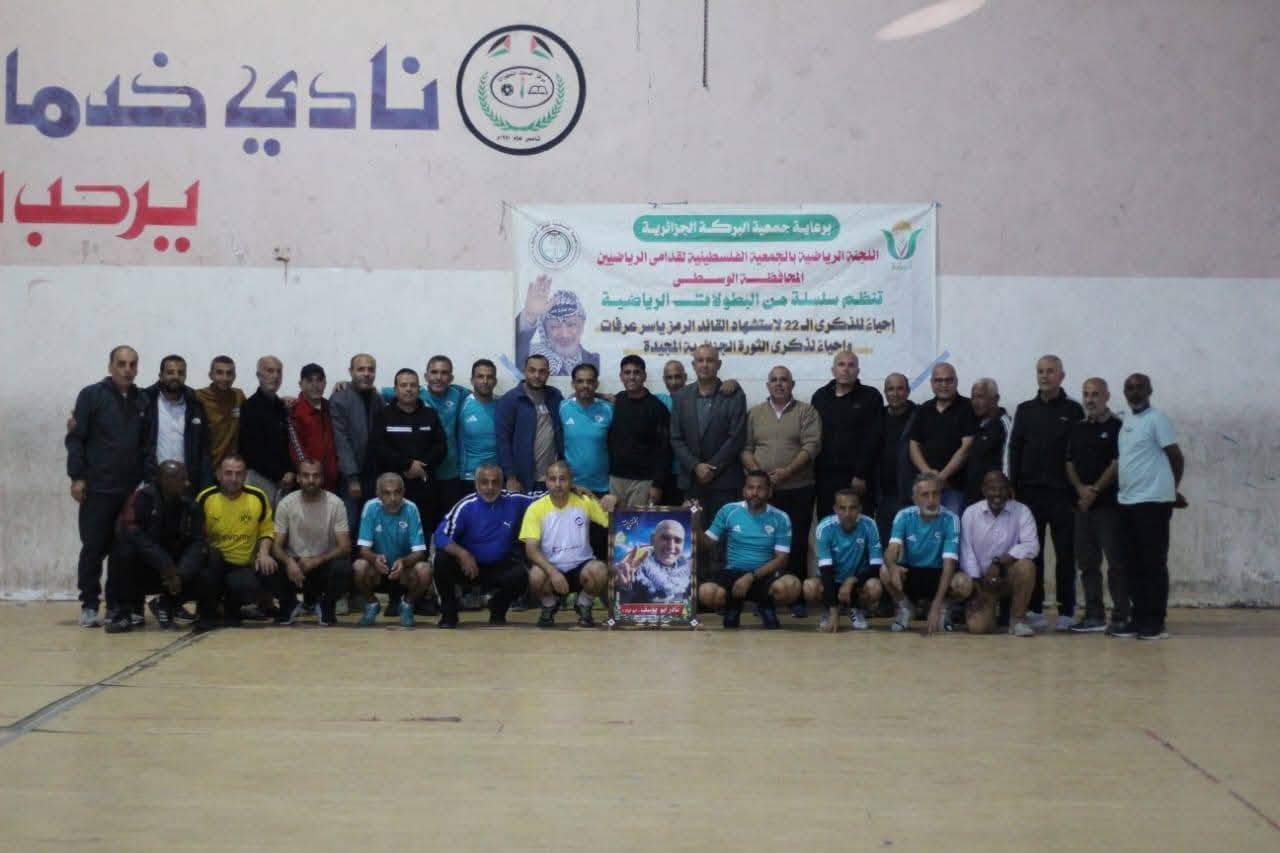
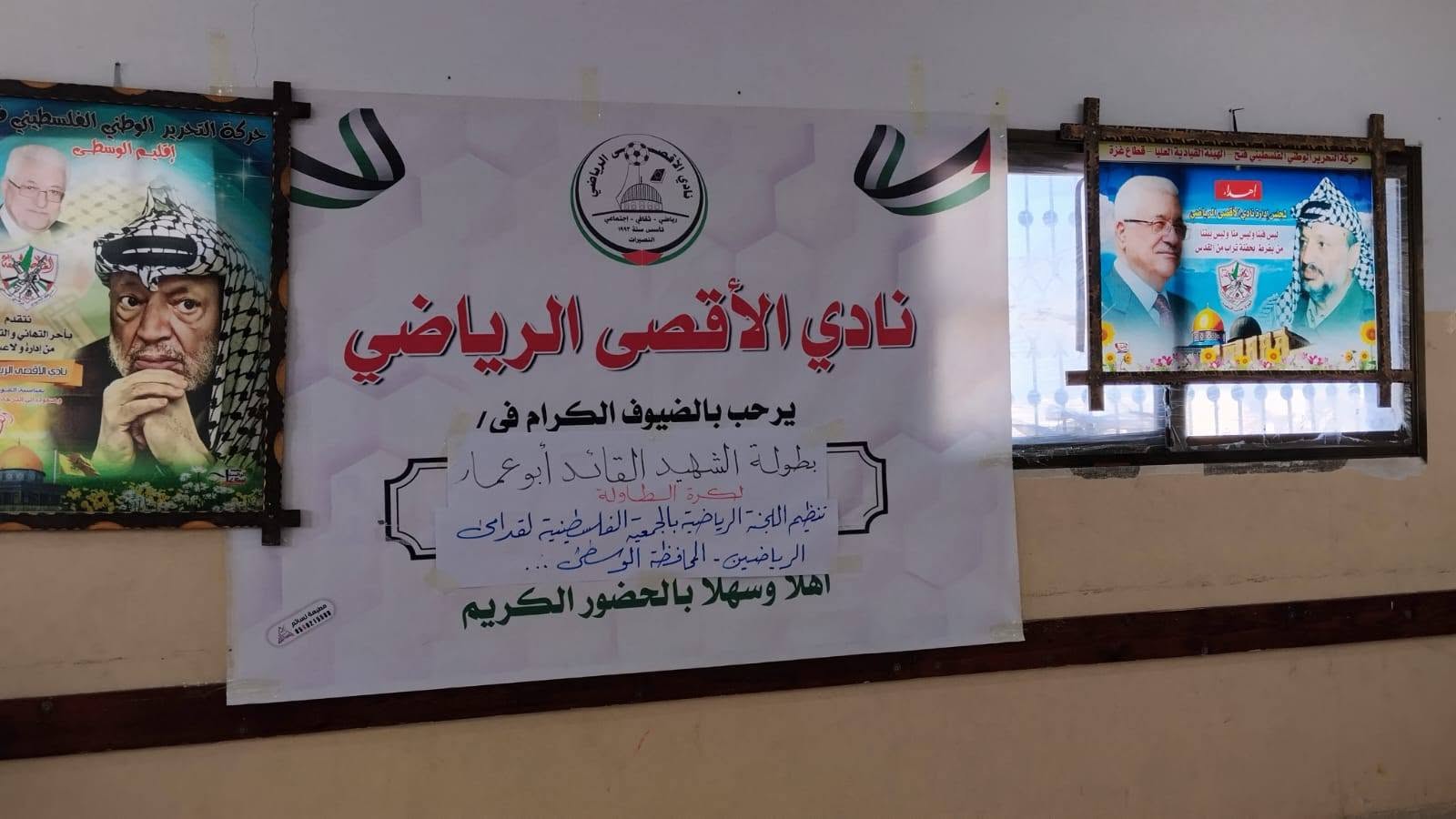
Al-Aqsa Sports Club commemorated today, November 11, the 22nd anniversary of the martyrdom of the iconic Palestinian President and national leader Yasser Arafat "Abu Ammar." Passing away at dawn on November 11, 2004, at the Percy Military Hospital in France following a prolonged and unjust siege, Arafat left behind an immortal national legacy and a people who continue to uphold his memory as the ultimate symbol of Palestinian identity and resilience.
In a commemorative tribute, the club reflected on the early life of Mohammed Abdel Raouf Arafat Al-Qudwa Al-Husseini—affectionately known by Palestinians as "Al-Khtiyar." Born in Jerusalem on August 4, 1929, to a Palestinian family with roots in Gaza, Arafat pursued civil engineering at King Fouad I University (now Cairo University). His lifelong dedication to the national cause began in his youth, including his service as a reserve officer alongside the Egyptian army defending against the Tripartite Aggression in 1956.
Tracing his revolutionary path, Arafat and a group of young Palestinian visionaries founded the Palestinian National Liberation Movement "Fatah" in Kuwait in the late 1950s. After becoming its official spokesperson in 1968, he was elected Chairman of the Executive Committee of the Palestine Liberation Organization (PLO) on February 3, 1969, spearheading the modern Palestinian struggle. In 1974, he delivered his historic address before the United Nations General Assembly, famously declaring: "I have come bearing an olive branch in one hand, and the freedom fighter's gun in the other. Do not let the olive branch fall from my hand"—a powerful testament to the Palestinian pursuit of a just peace without surrendering legitimate rights. He subsequently led the legendary 88-day steadfastness during the 1982 siege of Beirut before relocating to Tunis, where he miraculously survived the 1985 Israeli air raid on the PLO headquarters in Hammam Chott.
On the path toward statehood, Arafat proclaimed the Declaration of Independence of the State of Palestine in Algiers on November 15, 1988. Following the signing of the 1993 Declaration of Principles, he made a historic return to the homeland alongside tens of thousands of Palestinians to establish the Palestinian National Authority (PNA) as the nucleus of an independent state, earning the Nobel Peace Prize in 1994. On January 20, 1996, he was elected the first President of the PNA in free general elections, initiating the foundational building of state institutions across Gaza and Ramallah.
Following the collapse of the 2000 Camp David summit and the eruption of the Al-Aqsa Intifada, Arafat stood firm under a grueling Israeli military siege at the Muqata'a compound in Ramallah for over two and a half years. After suffering a sudden and severe health deterioration on October 12, 2004, he was airlifted to France on October 29, where he passed away at 4:30 AM on Thursday, November 11, 2004, at the age of 75, amid widespread Palestinian convictions that he was assassinated by poisoning.
Al-Aqsa Sports Club concluded its tribute by emphasizing that "Abu Ammar" was far more than a president; with his iconic keffiyeh folded in the shape of the map of Palestine and his steadfast military uniform, he embodied the story of an entire nation. Twenty-two years after his departure, Palestinians across every refugee camp and city—from Rafah to Jenin and the capital, Jerusalem—continue to honor his timeless lesson that the homeland is defined by sincere belonging and unwavering sacrifice.